At a glance
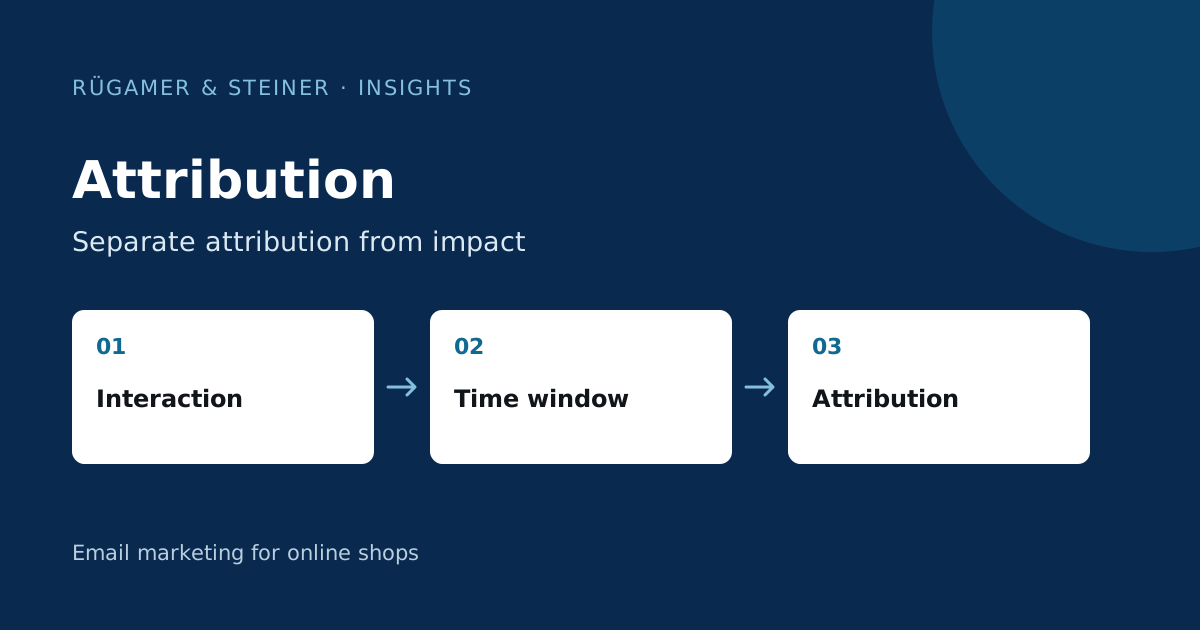
Attribution allocates orders or revenue to contacts based on defined measurement rules. Check time windows, interaction types, automated signals and the order metric used. Compare tools only against documented definitions. To draw conclusions about additional impact, a different research question is required, and ideally a controlled comparison.
What does ‘attribution’ mean in Klaviyo?
Attribution describes the assignment of a conversion to a previous message or interaction under certain conditions. Klaviyo explains time windows and settings in the Guide to the attribution model. The figure in the report therefore also depends on which contacts are taken into account and how long a message remains relevant for a subsequent order.
Begin each report with a simple definition line: order metrics used, currency, time period and allocation rules. A comparison without this information may show differing measurements as supposed performance trends. If settings are changed, note the date and purpose. A new report is therefore not automatically comparable with older values based on a different definition.
Monitor time windows and automatic signals
Check the active open and click windows in the account, as well as how MPP opens and automatic clicks are handled. A longer window may include more subsequent orders without the email having become more effective. Conversely, a narrower window may exclude orders falling outside the timeframe. The setting must be appropriate to the context and be consistently documented.
A model example: A person clicks on an email, carries out further research and places an order several days later. Whether this purchase is attributed to the email depends, amongst other things, on the time window set. This example does not refer to any real customer. It illustrates why the same order may appear differently if the measurement rule is changed. The commercial transaction remains the same, whilst its attribution changes.
Why Klaviyo and Google Analytics may differ
Google explains in the Overview of attribution and reports that attribution models evaluate touchpoints according to rules or data-driven methods. In GA4, also check which view and dimension you are comparing. User origin, session source and conversion attribution answer different questions. A total figure for email revenue is ambiguous without this context.
Further differences may arise due to consent, blocked tracking, device changes, time zones, currency and the handling of returns. Create a comparison table for the specific reports used. Start by checking a few verifiable orders, rather than assuming the larger total figure is the definitive truth. If a purchase is missing from a system, first clarify whether the event was recorded at all and assigned to the same definition.
UTM parameters make link sources traceable
Consistent naming helps to identify email clicks in web reports. Klaviyo describes the settings in the Guide to UTM tracking. Establish a consistent convention for source, medium and campaign name. Use names that another team member will still be able to match to the correct mailing even months later.
Check the links that are actually sent, including redirects. Parameters must not be lost unnoticed when navigating to the product page or another domain section. Do not include email addresses or other personal data in public URL parameters. Test several link types, such as product buttons, logos and editorial links. A toggle activated in the account does not yet constitute the complete link chain.
Distinguish attribution from additional impact
An attributed order indicates which contact a system takes into account under its rules. It does not indicate whether the order would have been placed without the message. A regular customer may well have already intended to make a further purchase. An email may alter the timing, influence the choice of products, or make no difference at all. These possibilities cannot be distinguished on the basis of the attribution value alone.
For greater impact, another question is needed: how do individuals who are as comparable as possible differ between those with and without the contact under investigation? A controlled comparison can help here, but requires sufficient sample size and appropriate methodology. Also check discounts, costs and contribution margin. Higher revenue does not automatically equate to a higher economic contribution if it results in additional incentives or delivery costs.
A clear monthly report for ecommerce teams
Present the shop’s total turnover, associated email turnover and messages delivered on separate lines. Include unique clicks, orders, turnover per recipient and relevant costs. Specify the respective definition. Distinguish between campaigns and flows, as they apply to different situations. A welcome series and a major seasonal promotion require different contextual information.
Explain notable changes in terms of reach, offering and measurement criteria. If twice as many recipients were contacted, higher attributed revenue is not, on its own, proof of better content. If a particularly high-priced product was sold, a single purchase can skew the result. Show absolute figures and rates together, and finalise the selected analysis period before comparing variants.
Checklist for checking measurement accuracy
- Order metrics, currency, time period and time zone are documented.
- Attribution windows and the handling of automated interactions have been checked.
- UTM names and links actually sent are consistent.
- The GA4 comparison uses an appropriate reporting level.
- Returns, discounts and missing measurement data have been taken into account.
- Reporting language distinguishes attribution from additional impact.
Repeat the check following changes to tracking or measurement rules. A report should make decisions understandable. If different definitions cannot be harmonised, both values should remain visible with their respective explanations, rather than being combined into a seemingly uniform figure.
Sources and further documentation
Product documentation and primary sources relating to the steps described. Editorial source date: 5 October 2026.