
At a glance
Record the offer, message purpose and recipients already waiting. Assign an owner for the change and return to normal. Klaviyo message statuses affect the sequence differently; manual status does not pause every later step. Test the intended progression against the actual configuration.
Inventory active offer messages
Before the promotion, list messages mentioning a voucher, pricing or time-sensitive availability. Add each destination page. Compare these statements with the planned offer. A welcome email containing selection guidance may need no change, while a pricing argument may become contradictory. Include later flow emails so that the decision covers more than the first contact.
Check status and waiting recipients separately
Record the current status of each affected message and its queues. In Klaviyo, contacts can continue after a manual message and receive later live messages. Changing status is therefore not a universal hold button. Check the manufacturer documentation and actual progression before each change. Record what should happen to contacts already waiting, rather than considering only new entries.
Illustrative example: change only the offer email
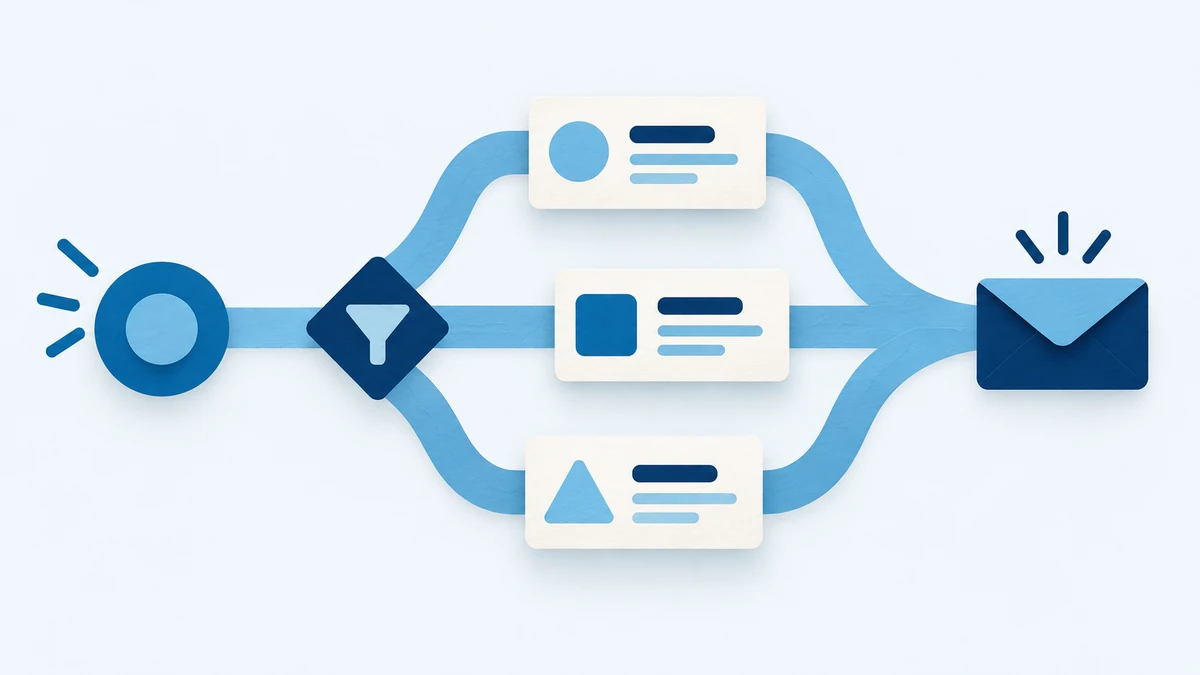
A fictional shop has a three-part welcome sequence: brand guidance, a voucher and product selection. Only the voucher conflicts with the promotion plan. The team investigates a limited adjustment to that message while retaining the other purposes. One test profile is already approaching the voucher step, and another enters afresh. The intended path is recorded for both. This does not prescribe the same status for every shop.
Record the restart before pausing
- Starting state: retain status, content and queue before making changes.
- Promotion state: describe the intended message and excluded cases explicitly.
- Return date: identify the owner and arrange another content test.
- Previous offer: check whether it remains valid after the promotion.
- Retest: trace existing waiting contacts and new entrants separately.
Use a shared record so that the return to normal does not disappear into one person’s calendar.
Choose the smallest effective change
Change only the demonstrated point of conflict and check subsequent steps too. The guide to email flows helps clarify the purpose of each sequence. Close the promotion task only when normal operation has also been checked again. A documented pause without a controlled restart leaves the most important remaining part of the work unfinished.
Sources and further documentation
Editorial preparation and source review: 6 October 2026.
Technical statements refer to the linked documentation. Examples and guidance are marked as such.