
At a glance
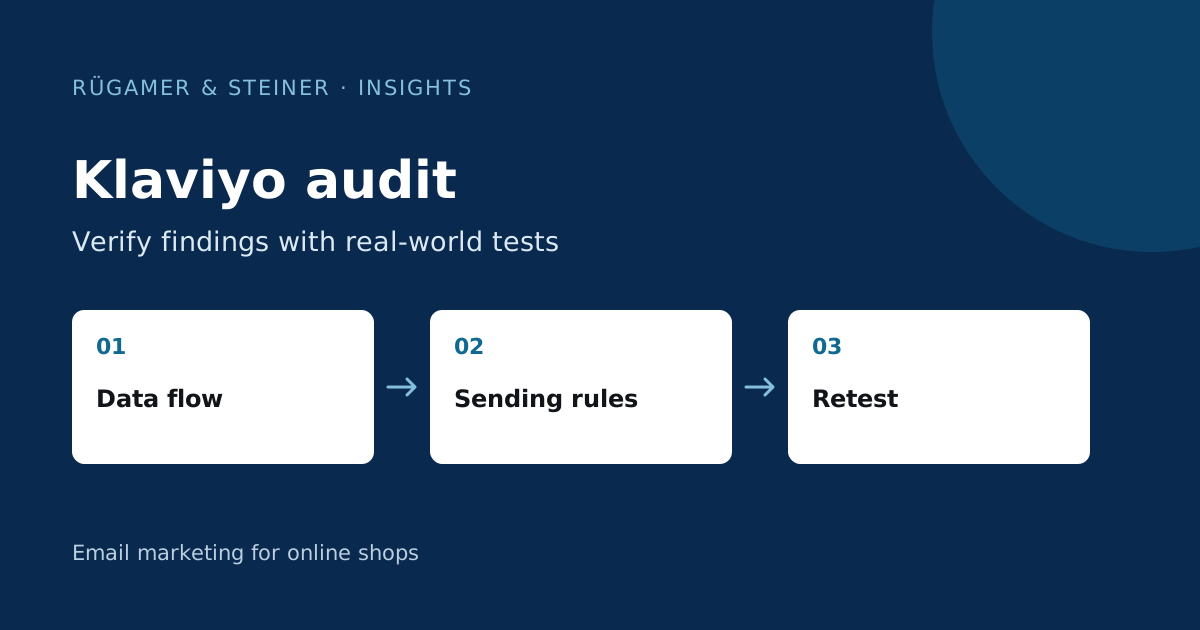
First, check the data and dispatch requirements; then the flow logic and content; and finally the financial analysis. Every finding requires supporting evidence, a responsible person and a repeat test. A high attributed revenue does not replace this verification.
Before the audit: Record the starting point and scope of the audit
Start with the business: Which products are important, how long does it take to make a purchase decision, and what role should email marketing play? Note down the shop system, languages, markets, ongoing campaigns and active automations. A discount campaign for new customers and a repeat-purchase journey require different evaluation criteria.
Note down a fixed evaluation period and the current measurement rules. Also record who is responsible for shop integration, content, approval and dispatch. If several teams are working on the account, an error can otherwise easily be attributed to the wrong step. A documented walkthrough is sufficient for an initial overview; changes should only be made once a clear assessment has been carried out.
Check data flow and sign-ups using genuine test profiles
Create a list of events with the source, actual name and expected fields. For Shopify, Klaviyo documents, amongst other things, Added to Cart, Checkout Started and Placed Order. Check the source on the event itself; similarly named metrics can come from different integrations. The Shopify data reference serves as a reference.
Go through sign-up, shopping basket, checkout and order using a dedicated test profile. Check event time and content in the profile at each step. Are the variant, currency and destination address correct? Is an event recorded twice? Check the process on a mobile device and the shop’s consent controls too. The event observed must match the action actually performed.
When it comes to newsletter sign-up, the form, target list and confirmation method must all be coordinated. Test different entry points separately: pop-up, embedded form and sign-up within the online shop. An existing email address, an event or list membership do not, in themselves, constitute documented authorisation to send emails. Unsubscriptions must also be received via the designated channel.
Public Klaviyo Audit Checklist
| Section | Specific review | Suitable reference |
|---|---|---|
| Integration | Correct shop, current events, no unintended duplicate events; product data and currencies are accurate. | Test profile with event timestamps and a controlled order. |
| Sign-up | All forms lead to the intended list; confirmation, language selection and unsubscription functions work correctly. | The process from the form to the received message. |
| Sender | The sending domain is verified; the authentication and reply-to address match the account. | Domain status and headers of a delivered test email. |
| Target audiences | Delivery requirements, AND/OR conditions and exclusions must be consistent with the message. | Verified sample profiles within and outside the segment. |
| Flows | Triggers, reactivation, waiting periods, purchase exclusions and parallel flows are deliberately defined. | Flow configuration and recipient activity for defined test cases. |
| Contents | Products, personalisation, terms and conditions, and link destinations are correct; the mobile display is legible. | Test email received with documented link check. |
| Measurement | Order metrics, attribution, link parameters and the reporting period must be verifiable. | Labelled export file containing definitions and relevant comparative figures. |
Do not give these points a single overall score. An incorrectly targeted recipient has a different impact from an awkward line break. Record the affected flow, frequency, specific impact, responsible person and acceptance criterion for every finding. ‘Optimise flow’ is not actionable; ‘the second reminder is still sent after a purchase’ can be verified.
Consider sender and deliverability separately
Check the sending domain for Klaviyo’s guide to setting up your own mailing domain. Use the DNS values generated in the account and then verify a genuine message. The visible sender address, the reply-to address and the technical authentication should all be documented together.
Gmail specifies authentication and other sender requirements; additional guidelines apply to larger senders, including DMARC and a one-click unsubscribe option for marketing messages. Check the requirements applicable to your mailings Gmail sender guidelines. A message that has been technically accepted does not necessarily mean it has been delivered to the primary inbox.
Examine bounces, complaints and unsubscriptions by time period and recipient group. If there is a noticeable change, also compare the volume of emails sent, the origin of recipients and the content. Klaviyo distinguishes between consent and suppression statuses: a profile blocked from receiving emails cannot receive marketing emails, even if consent has been given. The Documentation on suppressions explains this distinction.
Test case: a purchase must change the reminder
Fictitious test procedure for a checkout flow
- A test profile meets the previously verified dispatch requirements and initiates a checkout. The event and trigger source are recorded.
- The profile places an order during the waiting period. The order event must be visible in the profile before the scheduled message.
- At the message step, the system checks whether the purchase exclusion applies. The expected outcome is a skipped reminder due to the relevant filter.
- A second test profile does not place an order. It serves as a control for the regular reminder and its product and return link.
Klaviyo checks profile filters upon entry and again before the actions in a flow. Event-based trigger filters serve a different purpose. This is explained in the Documentation on triggers and filters. A recipient being skipped can therefore show that the intended rule is working. Check the specific reason in the Recipient activity for the flow message.
Turning findings into an actionable plan of action
First, rectify errors that incorrectly affect recipients, data or ongoing mailings. Next, address missing content relating to important customer scenarios. Design variations and additional tests are advisable once the fundamentals are robust. Check each correction using the same test cases as those used for the original findings.
The following will assist with subsequent support: Segmentation guide and the explanation regarding Shopping basket and checkout abandonment. Under Klaviyo agency we describe the framework for a collaboration; the Flow management focuses on the planning, setup and testing of automations.
Use the audit checklist with your team
For each review step, record the current status, supporting documentation, the person responsible and the date for the next review. The Audit checklist as a text file can be copied and adapted to your setup.
Sources and further documentation
Technical statements refer to the linked documentation. Examples and guidance are marked as such.