At a glance
Record the enquiry, document deadlines and prevent any further questionable marketing communications. Collect the actual registration and dispatch records. A legal assessment or statement should be provided by the relevant specialist based on the specific case.
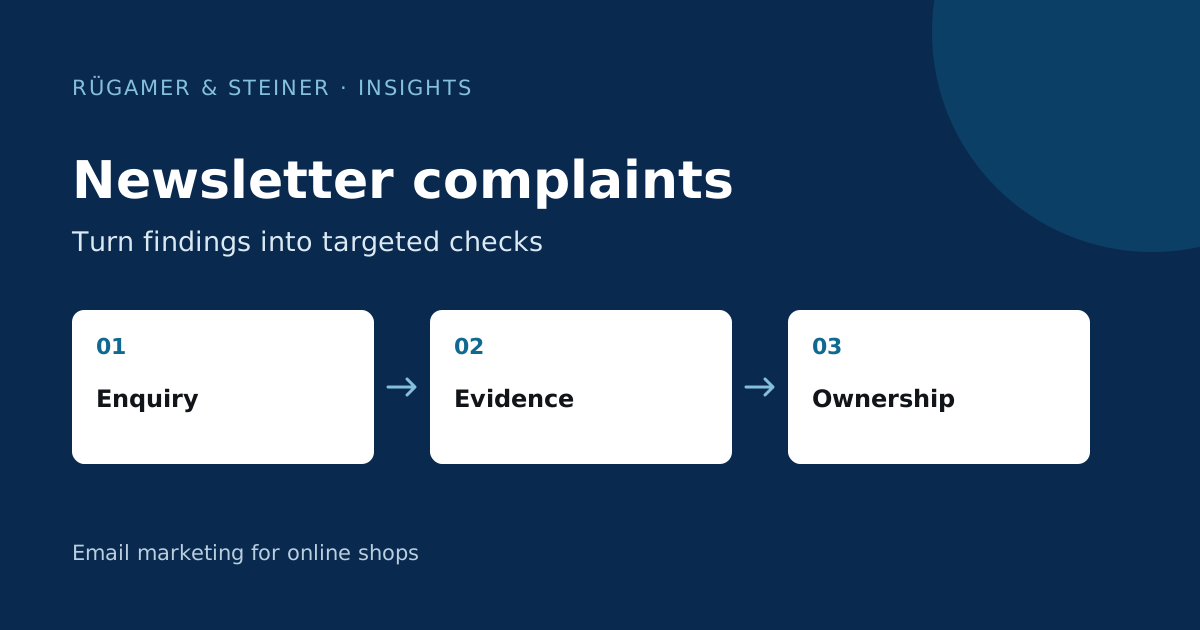
Distinguish between enquiries, complaints and formal warnings
A standard unsubscribing request, an allegation of unauthorised advertising and a formal warning letter trigger different processing steps. Read the enquiry in full: who is writing, which message does it refer to, what is being requested and what deadline is specified? Do not assume, based on the subject line alone, that it is spam or a harmless unsubscribing request.
Record the receipt and the relevant delivery address in a secure process. Specify who will process it and who will be responsible for the legal assessment. This organisational record does not replace a verification of authenticity or an assessment of the specific claim. Avoid making a hasty substantive commitment via an automated reply.
The original enquiry and relevant supporting documents have been received
Save the message received, including the details required for allocation. Then collect the relevant newsletter example, the time of dispatch and the actual recipient status. Ask the person responsible to check what information is required as supporting documentation and for how long it must be retained.
Do not delete or alter the existing information without careful consideration whilst the matter is being clarified. At the same time, unnecessary personal data does not belong in publicly accessible tickets or a general team chat. Use restricted access and ensure a traceable handover.
Specifically prevent further questionable marketing mailings
Check how the address in question can be reliably excluded from further marketing communications. Review campaigns, ongoing flows and connected systems. Exclusion from a single list may be insufficient if other delivery channels exist. Document the action actually carried out.
Sending suppression, unsubscription and profile deletion are different processes. An unplanned deletion may make it difficult to trace the origin; a note that is merely visible does not prevent the message from being sent. Test the opt-out technically using your own test profile. Do not send the data subject any additional promotional messages for verification purposes.
What consent and origin information is available?
Search for the source, date and content of the registration, the consent text visible at the time and, where applicable, the confirmation. Check imports and linked forms. A current status in the tool does not automatically explain how it came about. Document missing details explicitly, rather than filling them in retrospectively based on a plausible assumption.
Section 7 of the UWG deals with the conditions for advertising by electronic mail and a narrowly defined exception for existing customers. Whether a specific mailing falls under this depends on the conditions actually met. An order or an existing customer account does not permit a blanket conclusion. The Data Protection Guide describes the organisational review.
Create a clear and concise package for legal review
- Original request and required deadline.
- Relevant message, including the time of dispatch.
- Actual origin and existing registration documents.
- Relevant form and information texts from that time.
- Sending restrictions already applied and technical options still available.
- Owners and unresolved issues.
Have a specialist assess deadlines, claims and any proposed declarations or undertakings. Do not sign a pre-written undertaking solely on the basis of this guide. This article explains how to prepare the technical and organisational evidence; it does not assess an individual legal case.
Once the cause has been identified, rectify it within the process
Then investigate why the origin could not be traced quickly or why an exclusion did not work reliably. Was it due to an import without supporting documents, unclear form text or a second integration? Correct the actual data path and document the change.
Check new subscriptions, unsubscribes and exclusions again using controlled test profiles. Establish clear responsibility for future enquiries. A well-organised process means that the team can match a specific message to its actual registration and delivery path. It does not guarantee that there will be no further complaints, nor does it constitute a blanket legal clearance.
Sources and further documentation
Product documentation and primary sources relating to the steps described. Editorial source date: 5 October 2026.