At a glance
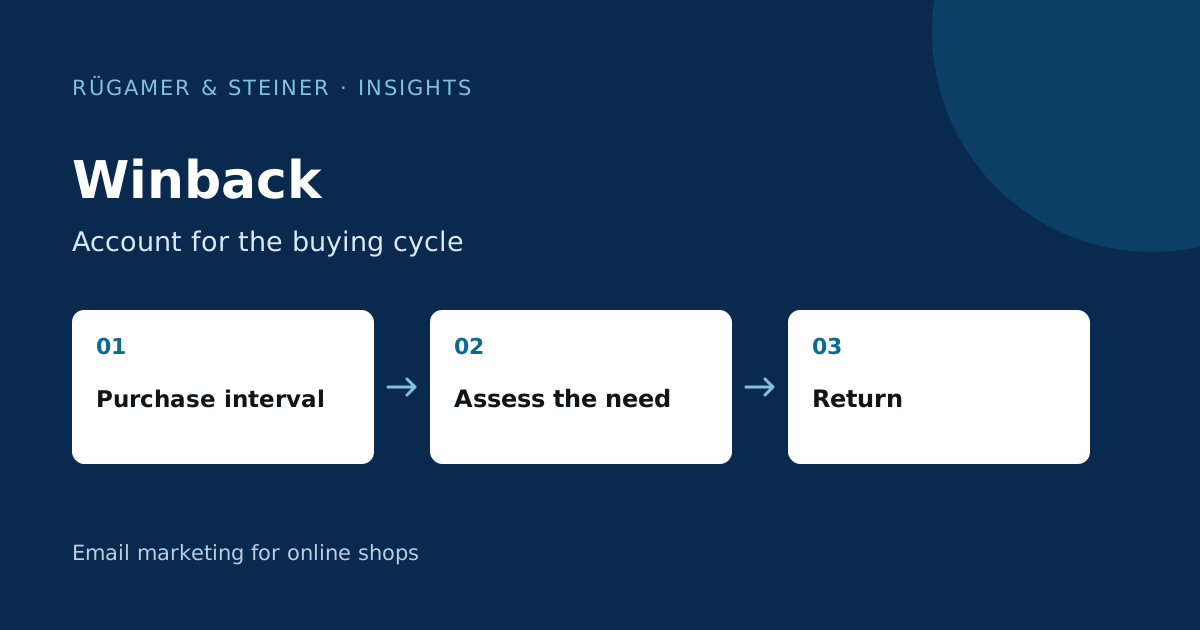
Winback targets previous buyers following a hiatus relevant to the product range. The timing is determined by observed behaviour and a deliberate assumption. Take into account repeat purchases, other post-purchase flows and sending eligibility. A voucher is a possible measure, not a requirement, and does not constitute proof of additional effectiveness.
Winback and repeat purchases are driven by different occasions
A win-back flow attempts to re-engage previous buyers after a prolonged period of inactivity. The Klaviyo Guide describes a structure involving a purchase event, a waiting period and the exclusion of repeat orders. A repeat purchase reminder has a closer connection: a product used regularly may soon be needed. Klaviyo handles this case in the Guide to a replenishment flow.
First, assign your product groups to a realistic occasion. Coffee beans, skincare products and replacement filters may have observable consumption cycles. A sofa or a piece of personalised jewellery requires a different reason for a return, such as matching accessories or a new collection. A general “We miss you” does not yet provide any benefit in this regard. The more specific the occasion, the easier it is to justify the content and timing.
Derive the purchase cycle from completed repeat purchases
First, consider customers with at least two completed orders. Determine the intervals between purchases and compare them within similar product groups. An average across the entire shop can lump together very different patterns. In addition to the average interval, check the distribution: if many customers buy after a short time and only a few after a year, a single figure is not very meaningful.
An example model: A retailer frequently observes repeat purchases between four and eight weeks amongst a group of regular coffee buyers. For this group, they might plan to send an early reminder to repurchase, followed later by a win-back email as a hypothesis. These figures describe a hypothetical planning scenario. In a real-world shop, quantities, household size and subscriptions must be taken into account. A large pack is consumed differently from a small sample size.
Who should receive the reply email?
Define the target audience based on a completed order, an appropriate interval and current dispatch status. Exclude people who have made a further purchase in the meantime. Also check whether an active subscription or another repeat purchase path already covers the same occasion. A customer with regular automatic deliveries is not a suitable target for a message regarding a supposedly missed repeat purchase.
Where necessary, distinguish between first-time buyers and long-standing customers if this results in different content. A first-time buyer may not yet be familiar with the product range. A returning customer is more likely to expect something new rather than another introduction to the brand. Use only features that are reliably maintained. If an assignment is missing, a suitable default path should follow rather than an accidentally empty or incorrectly personalised message.
A valid reason takes precedence over blanket pressure
A follow-up email can explain a new application, introduce an expansion of the product range or remind recipients of a suitable addition. Begin with information that is new and useful to this target audience. For coffee beans, a new roast might be relevant; for outdoor products, seasonal care instructions. Make use of the existing customer relationship without sounding more familiar than the actual relationship warrants.
Check the landing page just as carefully as the email. Is the advertised product available? Does it match the version purchased previously? Are the price and terms up to date? A product block with inappropriate recommendations can undermine the entire message. If there is no sensible selection available, a short editorial email with contact details for advice may be the better option. Any further contact requires its own, clearly defined task.
Assessing vouchers on economic grounds
A discount can encourage customers to return, but it reduces revenue per order and influences behaviour. Before implementing the offer, define the minimum basket value, excluded products, duration and whether it can be combined with other offers. Calculate, based on your own costs, how the offer will affect the contribution margin. Attributed revenue alone does not answer this question.
If sufficient volume is available, compare a suitable message with and without an incentive under conditions that are as similar as possible. Evaluate the order rate, revenue, discount costs and subsequent repeat purchases. A larger shopping basket may have resulted from the voucher or may have been planned without it. Define the scope of the measurement. With small groups, the test may not yield a clear conclusion; this does not imply an obligation to keep increasing the discount.
Test repeat purchases and contact limits before launch
- A previous order triggers the scheduled waiting period.
- Another order before the email suppresses the previous win-back reminder.
- A subscription or any other form of recurring purchase is appropriately excluded.
- First-time buyers, repeat buyers and those unfamiliar with the product range are provided with clear and understandable content.
- A voucher is only valid within its actual terms and conditions.
- Unsubscribing prevents further marketing messages.
Check the entire flow, including with two orders placed in quick succession. The mapping of the current purchase cycle must remain clear. Document the test events, expected exclusions and messages received. A delay entered in the editor does not in itself prove that the repeat purchase exclusion is functioning correctly.
Improving the route based on verifiable observations
Evaluate each message separately and consider complaints, unsubscribes and repeat orders within the same period. Also check the proportion of recipients skipped and the reasons for this. A high proportion due to purchases made in the meantime may indicate that the exclusions are working correctly. A high proportion due to recipients being unable to receive emails requires further investigation.
Only adjust the winback timing once the data provides a concrete answer to the question. If customers return significantly earlier, the planned email may be too late. If purchases are rare anyway, the campaign may need different content. Observed purchase cycles vary with product range and season; a clear review date prevents an outdated hypothesis from becoming a permanent rule without anyone noticing.
Sources and further documentation
Product documentation and primary sources relating to the steps described. Editorial source date: 5 October 2026.