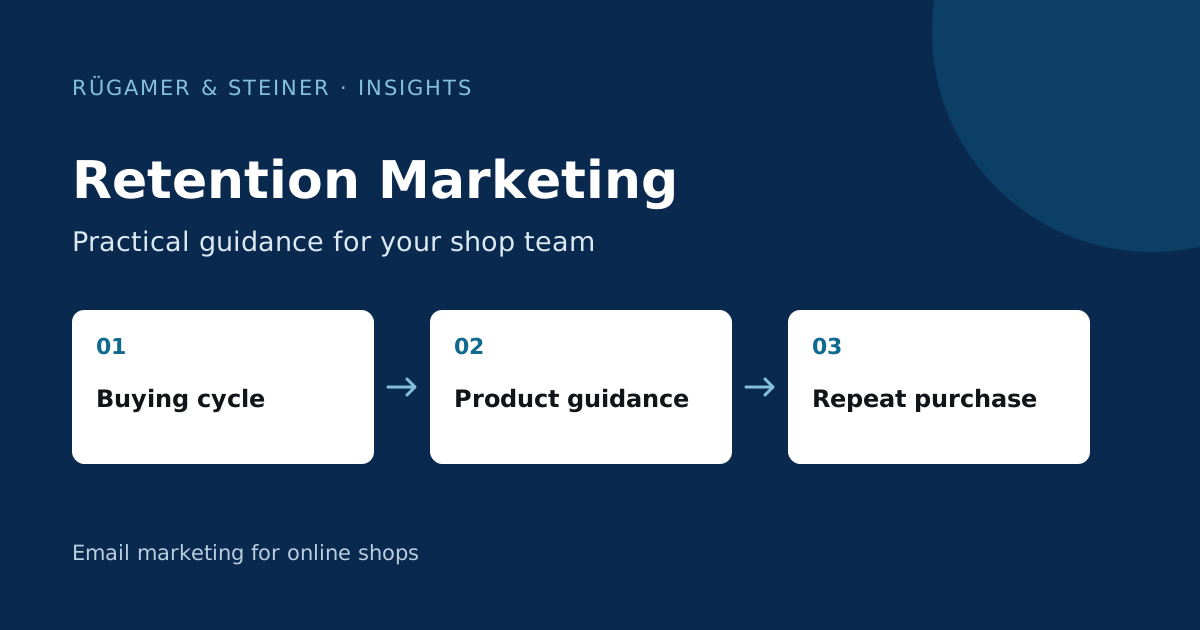
At a glance
Customer loyalty grows from a relevant offer, a good product experience and useful reasons to return. Review your product, service and purchase cycle first. Then plan messages for specific situations and assess repeat purchases across comparable customer groups and periods.
What does retention marketing mean in an online shop?
Retention marketing focuses on existing customers and their ongoing relationship with the shop. This may include user guidance, advice on accessories, repeat purchases, after-sales service and relevant new offers. The scope is broader than a single win-back email. Not every customer needs to make a repeat purchase at a fixed, short interval.
A consumable product has a different purchase cycle to a durable piece of furniture. You should therefore first define what a sensible next step would be. For a consumable product, this might be a repeat order; for a technical device, it could be the appropriate accessories or a resolved service enquiry. The option must be appropriate for the product actually purchased.
Investigate the cause before the message
Consider defined customer groups by time of first purchase, product and origin. How long does it typically take until the next order? Which groups have been monitored for long enough? A newly acquired customer has not yet had the same opportunity to make a repeat purchase as a customer from the previous year.
At the same time, enquire about returns, support cases and product issues. A poor user experience cannot be resolved by a friendlier newsletter alone. You should therefore also note measures outside the email channel. These could include clearer instructions, better sizing information or a reliable service process.
Define a suitable task for every customer touchpoint
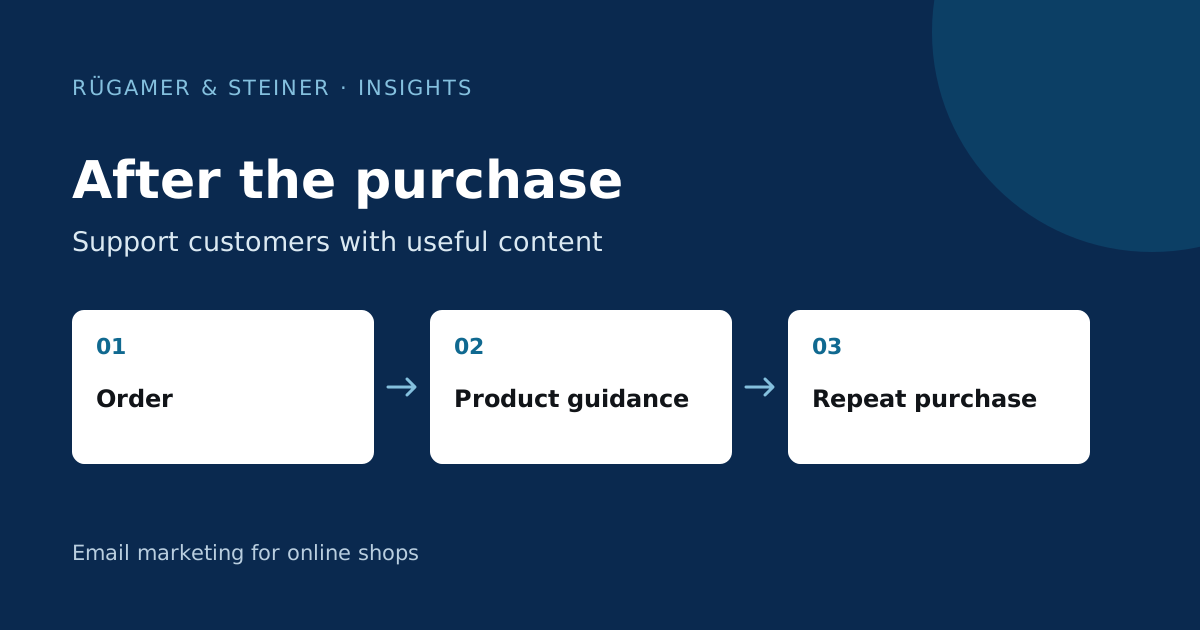
- After placing an order: Relevant preparation and usage guidance, coordinated with existing transactional messages.
- During use: Explain maintenance, usage or typical questions.
- Before an expected repeat purchase: Clearly indicate availability and the appropriate variant.
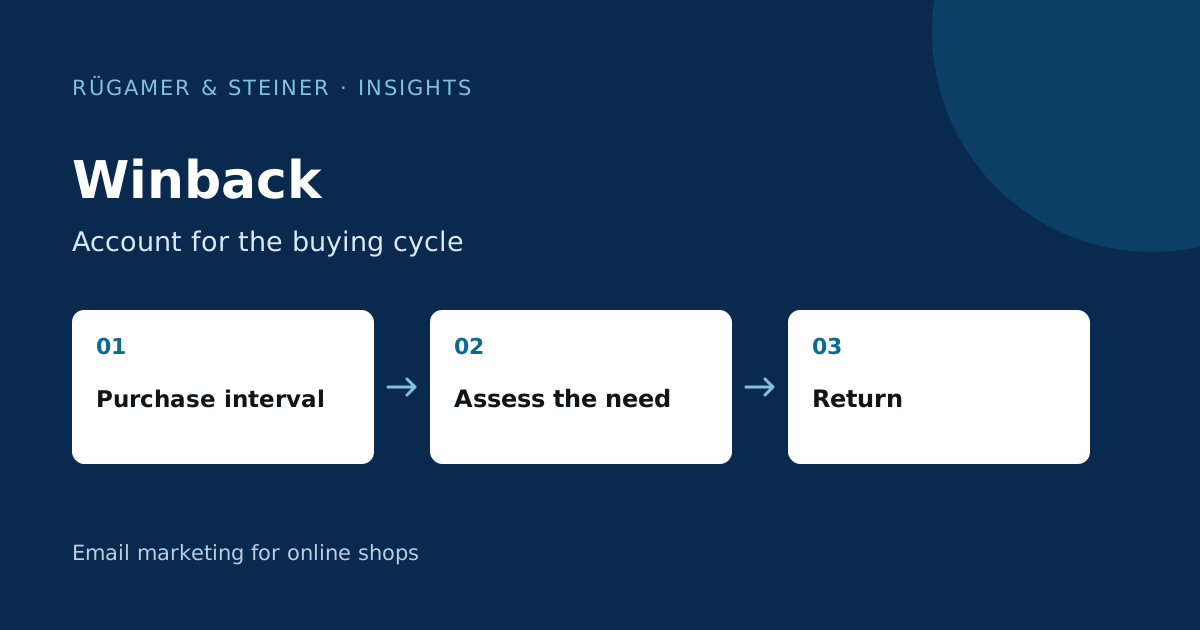
- If there is a prolonged delay: Assess the need and offer a suitable reason to return.
The Post-purchase guide describes the technical planning after purchase. For a later return, the Winback Guide explains how the purchase interval affects the reason for contact. Check purchases, unsubscribes and other exclusions again before sending a message.
A sample model for a consumer product
Fictitious planning scenario: A shop sells filters that customers replace at varying intervals. The team is analysing completed repeat purchases of the same product family and recurring enquiries. Based on this, it is first developing a user guide and later a reminder regarding the correct replacement size.
The specific timing is derived from product demand and the company’s own data. It is not applied across the board to all customers. Anyone who has already made a repeat purchase in the meantime will not receive the reminder. The example describes a possible testing procedure and does not contain any actual customer results or promised increases.
Deliberately coordinate channels and discounts
A customer may be eligible for a campaign, a flow and other channels at the same time. Determine which message takes priority in each situation. Choose email, WhatsApp or another channel based on content, authorisation and recipient preference. More touchpoints do not automatically mean more helpful communication.
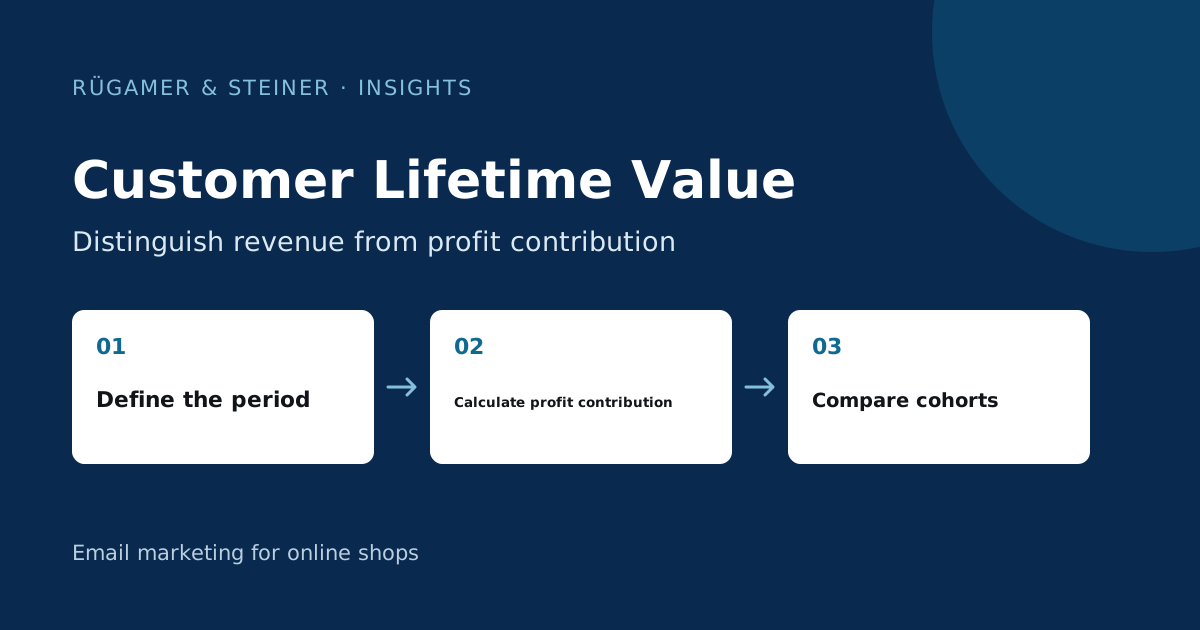
Before offering a discount, check whether a selection guide or a reminder of a suitable product already fulfils the purpose. If a voucher is appropriate, the terms and conditions and the redemption process must function reliably. Take discounts and delivery costs into account later in the financial assessment. Attributed turnover does not yet indicate additional profit.
Assess repurchase and cost-effectiveness separately
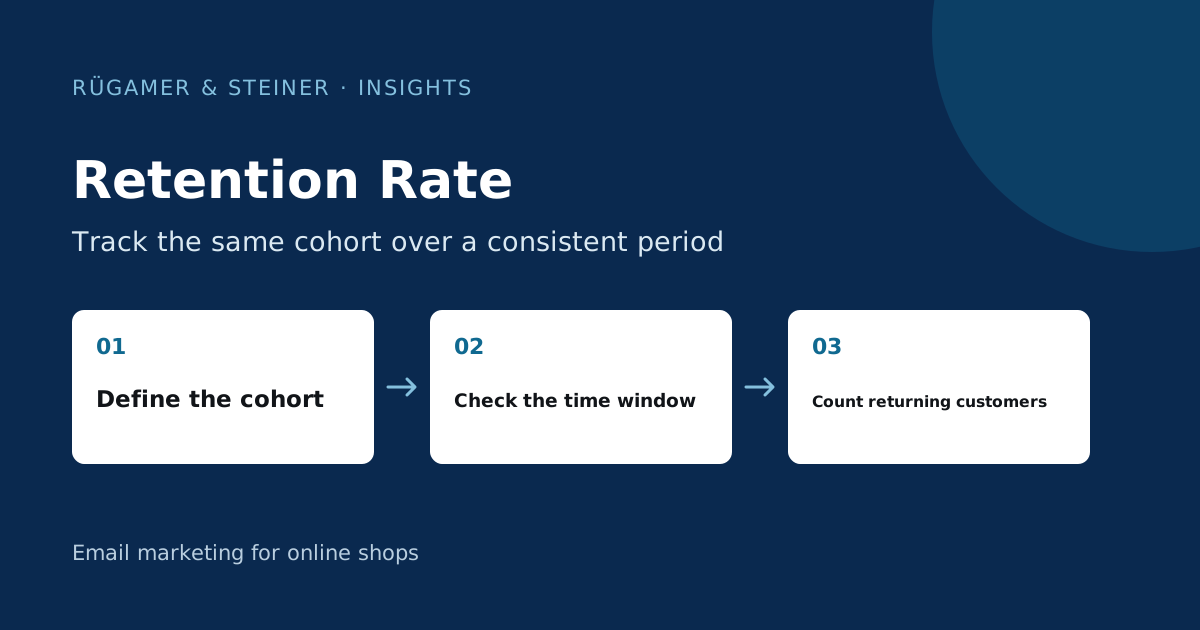
The Retention Rate requires a clear definition of the customers and time periods under consideration. In addition, the Customer Lifetime Value can help assess longer customer relationships financially. For both metrics, account for returns, costs and the available observation period.
Compare similar groups using the same measurement criteria. A well-planned control group can be helpful in assessing the additional impact of a measure. Determine in advance when the observation period ends and which metric answers the question. A single campaign attribution does not replace this assessment.
- Narrow down the product and customer context.
- Check purchase intervals and service enquiries.
- Choose a clear objective for the message.
- Check purchase status and permission to send.
- Define the comparison and evaluation period in advance.
Sources and further documentation
Product documentation and primary sources relating to the steps described. Editorial source date: 5 October 2026.