At a glance
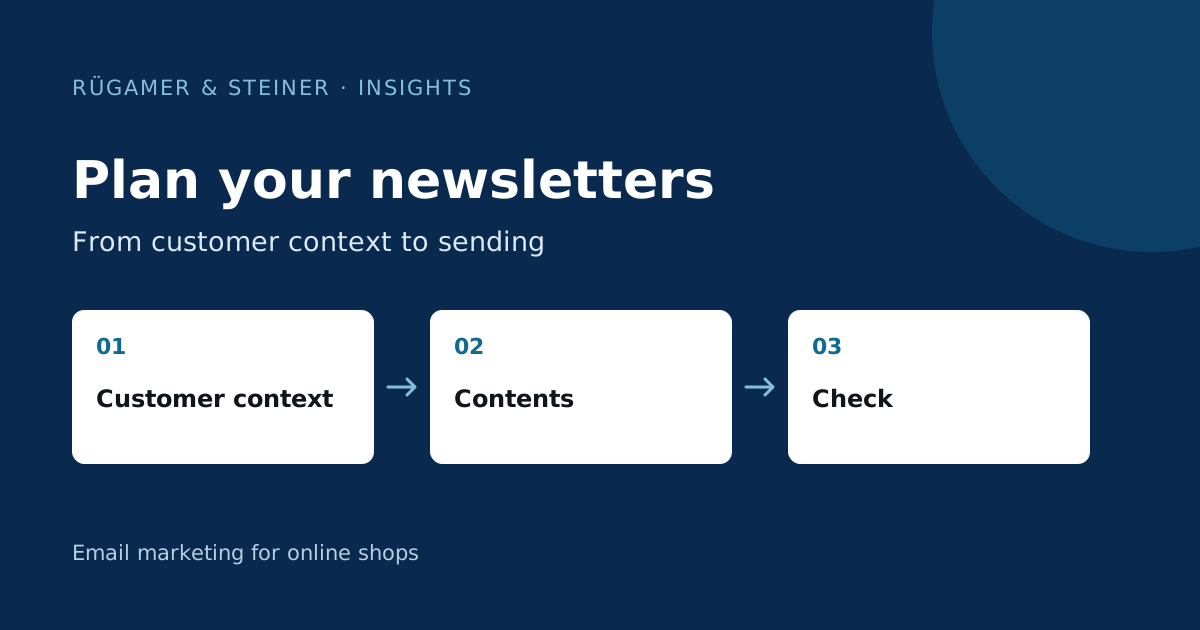
Plan newsletters around recipients’ information needs and what the online store can deliver. Each entry needs a reason, audience, key message, landing page, owner and review date. Account for existing flows. A manageable, carefully checked plan provides a sound basis for later tests.
What is the purpose of a newsletter in the shop?
Newsletter campaigns address a planned occasion; flows respond to defined events. The Klaviyo Campaign Guide explains creation and dispatch. The editorial team should consider both contact methods together. A customer issue that regularly arises after an order is often better suited to a post-purchase flow than to a one-off newsletter sent to everyone.
Gather topics from product advice, support enquiries, product range, seasonal offerings and genuine news. Note down who each topic is useful for. A selection guide for beginners and a range of accessories for experienced buyers require different target audiences. Only plan content for which technical information and suitable landing pages are available. A guide that has been announced but is only to be produced after dispatch creates avoidable time pressure.
Every calendar entry requires the following details
- Reason: What specific question or change makes the email relevant?
- Target audience: Who should receive them, and who is excluded?
- Key message: What should the reader understand after reading this?
- Next step: Which landing page continues this message?
- Responsibility: Who provides the facts, designs and checks?
- Deadline: When must the content, test email and approval be finalised?
Add stock levels, terms and conditions, and measurement questions where relevant. The plan must remain feasible for the team to implement. Too many mandatory columns with no actual use make it confusing. A few fully maintained fields are more helpful than a large calendar page full of unresolved drafts.
A four-week plan of your own as a model
| Week | Contents | Target audience and objective |
|---|---|---|
| 1 | Compare rucksack sizes based on your daily plans | Prospective customers: read the relevant selection guide |
| 2 | Care after rainy rides | Buyers of suitable products: use the guide |
| 3 | New range of accessories with clearly distinguishable differences | Relevant product interests: compare models |
| 4 | Answers to frequently asked questions about fit | Prospective clients requiring advice: open ‘Help’ or ‘Contact’ |
This model illustrates different tasks; it does not specify a recommended frequency. Whether four mailings are appropriate depends on expectations, available content and the remaining contacts. A shop with few reliable topics may initially send out mailings less frequently. The target audiences must also be assessed on the basis of actual data.
Plan sending frequency and flows together
Check the messages several typical profiles are expected to receive over a week. A new subscriber may receive welcome, browse and campaign emails together. Plan priorities and exclusions so the sequence makes sense. Klaviyo describes Smart Sending as a way to limit closely spaced messages. Check your settings, and remember that skipped messages are not automatically resent later.
Use a frequency rule to complement editorial judgement. Inappropriate content does not automatically become appropriate simply by increasing the interval between occurrences. Also check whether the subscription promise matches the actual frequency. If the schedule changes permanently, the subscription and preferences should reflect the updated status. Recipients with specific interests may require different content without the entire shop sending out communications more frequently.
Write the subject line, preheader and landing page together
The subject line states the reason for the email, the preview text provides helpful information, and the body of the email addresses both. Avoid repetitive sentences and content designed purely to arouse curiosity without providing a subsequent response. A subject line regarding size advice should not lead to a general sale. Check the preview texts that are actually visible in received messages, as space and display vary depending on the email programme.
Write the main message before starting the design. Then select an image, headline and button appropriate to the task. A brief editorial message can be more helpful in providing clear guidance than many product cards of similar weight. The landing page is part of the design: are selection guides, offers and terms and conditions easy to find there? A good click is only useful if the next step works.
Include approval and dispatch checks firmly in the schedule
Separate content review, presentation and sending configuration. The person responsible for product information checks products, prices and terms. The designer checks readability and reading order. The sending check covers recipients, exclusions, senders, links and measurement parameters. One person may perform these tasks, but every check still needs to happen.
Create the final test email following the latest changes. Open it on a smartphone and a desktop and check the main button, product links, contact details and unsubscribe link. Check for missing profile values and any excessively long product descriptions. If a change after approval affects the price, a link or the target audience, the relevant test must be repeated. An earlier test email does not validate the new version.
Use each campaign’s results to plan the next
Assess the campaign against the question defined beforehand. Unique clicks on a selection guide in an advice email offer a different perspective from orders following a discount campaign. Include unsubscribes and feedback. Compare similar audiences and account for reach. A larger campaign may show more revenue without being more successful per recipient.
Note down a specific conclusion: Which question remained unanswered, which content needs to be explored in greater depth, and which process needs to be improved? Record these insights alongside the calendar. In this way, the newsletter evolves in response to observed needs. The plan is therefore a tool for reliable editorial work and transparent testing, rather than a rigid list of pre-determined offerings.
Example of a newsletter from our work

Sources and further documentation
Product documentation and primary sources relating to the steps described. Editorial source date: 5 October 2026.